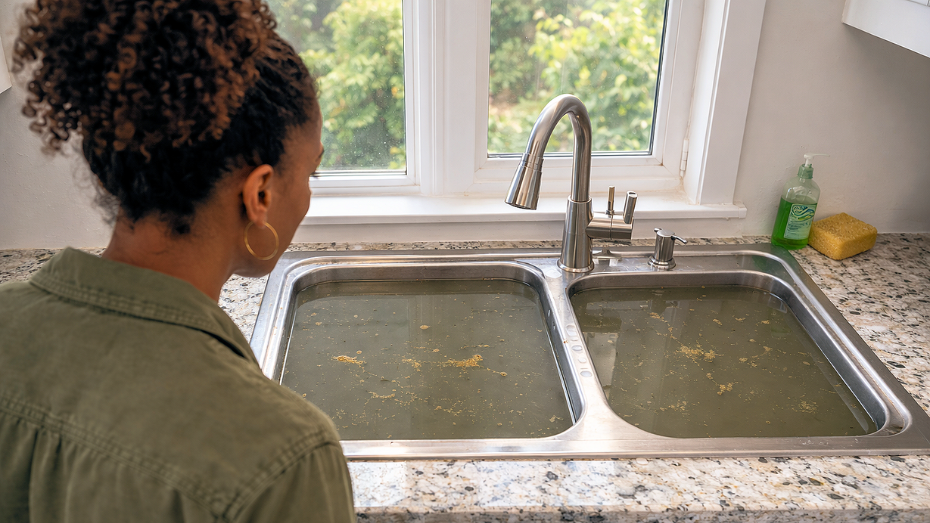
There is no requirement in community scheme legislation for insurance to attend to unblocking pipes. The mainstream community scheme insurers we work with exclude the unblocking of pipes or blocked pipes.
Sudden and unforeseen water damage may be covered, but note that this includes water damage only and will normally exclude the cost of removal of sewerage, dirt, or other objects.
In other words, water damage is covered, but “clearing or cleaning” is not usually considered to be “damage” by definition.
Many insurers are now applying stricter adherence to the conditions of cover. Reasonable precautions and preventative measures need to be taken. Where such is absent, and damage could have been prevented, claims are likely to be rejected; for example, where a gutter or drain is not regularly cleaned, is clogged up, and causes an overflow and water damage, the insurer will likely reject such a claim in its entirety.
Scenario A
A PVC pipe carries waste through each section, and several sections connect into this common pipe, thereby making this a pipe servicing a few sections, i.e. common property.
Somebody dispenses solid material which blocks this pipe, causing a backflow of water into a section. The section is damaged by water and waste. The water flows into the kitchen, which causes sudden and unexpected damage to the kitchen units and flooring. There is foul debris and smells.
Once it is determined that the cause was a blockage, the insurer will likely pay for the water damage to the kitchen units and flooring. They will most likely not pay for the unblocking or repair of the blockage (blockages not normally covered), nor will they usually pay for the removal of smelly debris, smells, or bacterial issues. It is the water-damaged portion of the claim that will most likely be admitted by the insurer.
Always bear in mind that burst pipes are usually covered, which implies “a pipe under pressure” and not waste pipes. As a rule, waste pipes are highly unlikely to burst. It is only the resulting water damage that would be considered here, i.e. the sudden water damage to kitchen units and say damage to flooring. Note that only damage is covered, not cleaning!
Scenario B
If the blockage caused a slow and barely detectable overflow (or leak or damp), which occurred over time and damaged the kitchen unit slowly over an extended period, resulting in mould, smells, swelling of melamine, etc., there would be no insurance claim whatsoever.
If the damage had been reported immediately, it could have prevented further loss, and if the body corporate had been held liable, they could have argued that the owner (or his tenant) was negligent by not reporting the damage earlier. Under reasonable circumstances, the body corporate should pick up the expense for the loss.
Scenario C
The owner of the section above had a blockage in that section’s pipe (the owner above’s pipe, not a common pipe), which caused sudden and unforeseen damage to the section below.
Under these circumstances, the insurance will usually pay for the resulting damages, provided that the damages occurred suddenly and not gradually over time.
Conclusion
As long as the resulting water damage is sudden and unforeseen, and the cause is not due to negligence, the insurer will usually admit the water-damaged part.
Usually, contamination, dirt, cleaning, and pollution, not being “water damage” usually fall outside the ambit of cover.