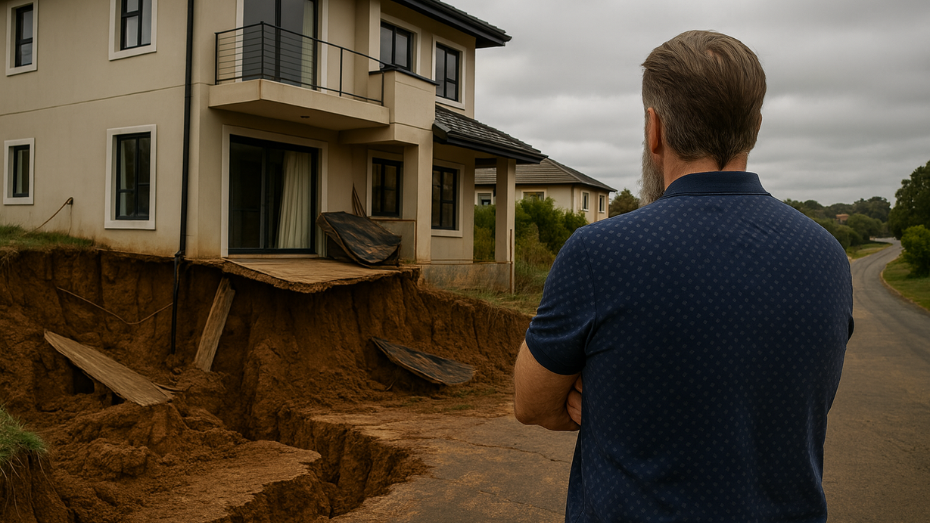
Subsidence and landslip are among the most devastating risks to property but remain one of the least discussed insurance perils. Understanding this cover extension and how it may or may not protect against loss or damage to property is crucial for property owners and investors.
What is subsidence?
Subsidence refers to the downward movement of ground and is usually caused by changes in soil moisture or soil that leads to the removal of essential support. This may lead to sinking or movement of the foundation with subsequent cracking or even collapse of the building.
What is the definition of landslip?
Landslip, or landslide, refers to the downward movement of earth or rock on a slope. Such movement is often triggered by heavy rainfall, erosion or a seismic event.
The occurrence of subsidence or landslip will depend on the nature of the landscape and other influencing factors such as:
Weather
Heavy rainfall can trigger subsidence or landslides, particularly where there is insufficient drainage or unstable slopes.
Substratum/soil type
Clay-rich soils undergo significant expansion and contraction depending on the moisture content of the clay, which leads to a high risk of subsidence. Areas with dolomite formation are also prone to the formation of sinkholes and subsidence.
Mining activity
The creation of underground voids such as tunnels and shafts increases the risk of subsidence. Activities such as mining may cause substantial vibration, which can also initiate incidents of subsidence or landslip.
Limited cover
While most building insurance policies do not automatically include subsidence and landslip cover, many will provide complimentary ‘limited’ cover for these perils. This ‘limited’ cover is subject to an extensive list of exclusions and restrictions. As such, insured persons are always urged to check policy terms and conditions very carefully to ensure they understand what is covered and what is not.
Documentation required
Where an insured party requests full subsidence and landslip cover, insurers will require specific supporting documentation. Documentation will include a recent engineer’s or geotechnical stability report by a suitably qualified engineer confirming the building’s structural integrity and compliance with architectural design and relevant building regulations. Insurers may also request details of the property maintenance plan. Additional premiums should be expected when including full subsidence and landslip cover. Again, the insured must consult the policy wording to familiarise themselves with the relevant policy terms and conditions.
Inclusions and exclusions
Generally, subsidence and landslip cover will include cover for the building structure against damages such as cracks in walls, floors and ceilings caused by ground movement. Exclusions to cover will include damages suffered as a result of inferior design, ineffective or defective construction and lack of adequate maintenance. Cover for minor damages of a cosmetic nature which are not linked to structural movement would also be excluded, as would cover for certain external structures (e.g. garden walls and outbuildings) unless specifically included.
While many properties are not subject to the risk of subsidence and landslip, property owners with property located on sloping ground, in areas with clay-rich soil or historic/ongoing mining operations or dolomite formations should consider extending their insurance cover. While the cost of this cover may seem exorbitant, it is minimal compared to the potentially catastrophic financial loss of being uninsured.
Author: Bruce Gibson
Addsure is a leading sectional title insurance broker. Get fit and proper advice from advisors who understand sectional title.