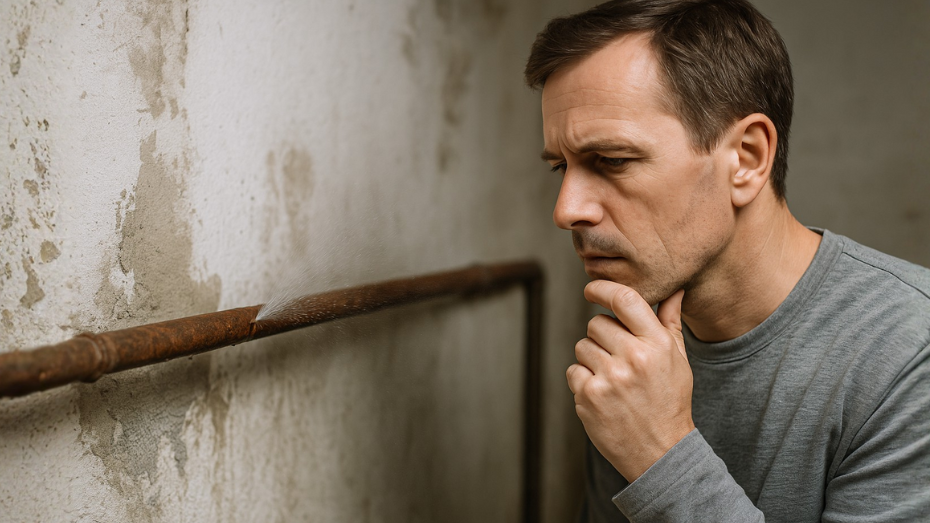
We often see the question pop up on social media: “Is there any insurer that covers leaking or rusty pipes?”
It’s a fair question, especially for those living in older buildings where pipes are starting to show their age. Unfortunately, there isn’t a simple “yes” or “no.” Let’s unpack this topic a little more.
Insurance vs. wear and tear
In most policy wordings, the insurance is designed to respond to sudden and unforeseen events, not gradual deterioration.
When pipes leak because they’ve rusted, corroded, or perished over time, that’s classified as wear and tear, not accidental damage.
Most insurance policies, including sectional title building policies, exclude wear and tear. These kinds of failures are considered part of the ongoing maintenance responsibility of the owner or the body corporate.
Why don’t insurers cover rusty pipes?
In the past, some insurers experimented with offering small benefits (like R5,000 towards leaking pipe repairs or leak detection). However, they soon found that these benefits were quickly exhausted, especially in older complexes where deterioration is inevitable.
Covering maintenance-type issues would make the insurance policy a maintenance plan, not a risk policy, and that would push premiums through the roof.
In other words, everyone would end up subsidising the few owners who happen to experience leaks.
“But the pipe is in the wall…”
We often hear: “How could this be a maintenance issue if the pipe is inside the wall? How could I have maintained it?”
Point taken, but remember, if the owner can’t access the pipe, neither can the insurer.
Insurance is intended to respond to sudden and unforeseen damage, for example, a pipe that bursts unexpectedly, not due to gradual deterioration or internal corrosion caused by wear and tear.
An analogy we use to simplify – When your car rusts, your insurer doesn’t replace the body panels. The same logic applies to plumbing inside your property. The same applied to a leaking gasket in a car engine, which one cannot see.
Individual cover options
There are a few individual household insurance policies that offer optional “leak cover,” usually for a small benefit limit and at additional cost.
However, these are not standard for body corporate policies and need to be arranged personally through a homeowner’s broker or direct insurer.
If an individual owner particularly wants that kind of protection, they can explore it privately, but it shouldn’t form part of the body corporate’s communal policy in our view, as that would unfairly spread the cost, meant for that owner, to all owners.
Planning for the inevitable
The reality is that plumbing systems in older complexes will eventually need attention.
The best solution is to budget for future common area pipe replacements within the scheme’s maintenance plan.
That way, when leaks start to occur, the body corporate already has funds set aside to address them responsibly.
Any proposal to add special insurance extensions or non-prescribed cover should be approved at the AGM and may even require a special resolution, since it increases the shared premium cost.
Final thoughts
At Addsure, we always encourage schemes to keep insurance for insurance and maintenance for maintenance.
It’s the most sustainable and fair way to protect everyone’s interests and to keep premiums stable over time.
Authors: Candice Persson and Mike Addison
Addsure is a leading sectional title insurance broker. Get fit and proper advice from advisors who understand sectional title.